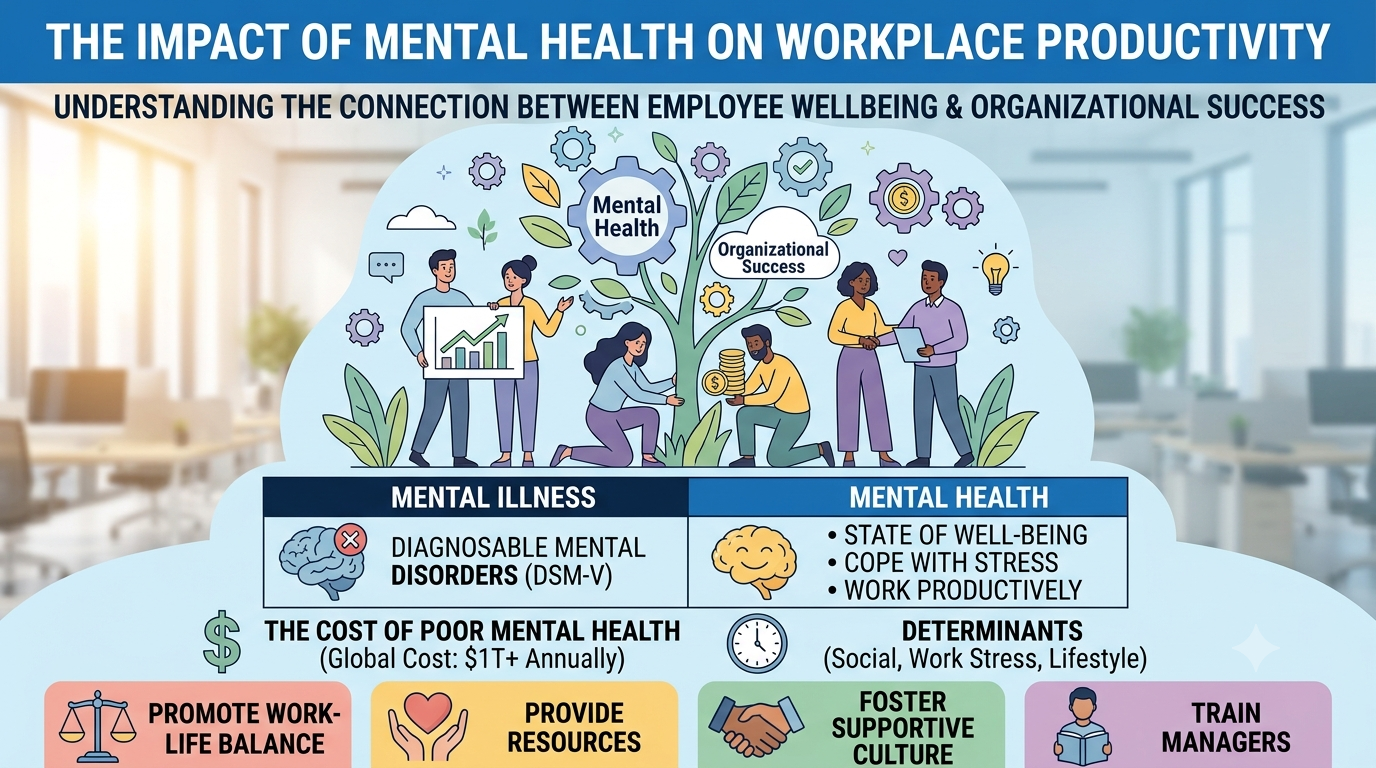
The Impact of Mental Health on Workplace Productivity
Understanding the critical connection between employee wellbeing and organizational success
Mental health is no longer a topic that organizations can afford to ignore. In today's fast-paced work environment, stress, anxiety, and burnout have become increasingly common, taking a significant toll on both employees and businesses. The post-pandemic era has further amplified these challenges, raising critical awareness about mental health and mental illness across workplaces and homes worldwide.
Understanding Mental Health vs. Mental Illness
To effectively support employees, it is essential to distinguish between mental health and mental illness:
Mental Illness
Refers to a collection of diagnosable mental disorders, as classified by the Diagnostic and Statistical Manual of Mental Disorders (DSM-V) (American Psychiatric Association, 2018).
Mental Health
Defined as a state of well-being in which individuals recognise their own abilities, cope effectively with the normal stresses of life, work productively, and contribute meaningfully to their communities.
Key Distinction: Experiencing mental health issues does not necessarily indicate a diagnosable mental illness. Many individuals encounter periods of poor mental health without meeting the clinical criteria for a disorder. Conversely, individuals with diagnosed mental illnesses can and do experience extended periods of optimal physical, mental, and social well-being (Centers for Disease Control and Prevention, 2021).
The Cost of Poor Mental Health
According to recent studies, poor mental health costs employers billions of dollars annually in lost productivity, absenteeism, and healthcare expenses. Employees struggling with mental health challenges are often less engaged, more likely to take sick days, and may have difficulty concentrating or making decisions.
Determinants of Mental Health
Optimal or sub-optimal mental health is influenced by a complex interplay of factors. According to Chan and Hazan (2022), these determinants include:
- Multifactorial influences: A combination of social, psychological, and biological factors.
- Environmental and social stressors: Rapid social change, stressful work conditions, and social exclusion.
- Systemic and lifestyle factors: Gender discrimination, unhealthy lifestyle choices, physical ill-health, and human rights violations.
What Organizations Can Do
There are several steps organizations can take to support employee mental health:
Promote Work-Life Balance
Encourage employees to take regular breaks and use their vacation time.
Provide Mental Health Resources
Offer access to counseling services or employee assistance programmes.
Foster a Supportive Culture
Create an environment where employees feel comfortable discussing mental health.
Train Managers
Equip managers to recognize signs of mental distress and respond appropriately.
Accessing Support
If you or your employees require further support regarding mental health challenges and strategies to improve well-being, we encourage you to contact your Employee Health and Wellness service provider. Remember, any habit can be changed if you are motivated and supported to do so.
Conclusion
Investing in employee mental health isn't just the right thing to do—it's also good for business. By creating a supportive work environment, organizations can improve productivity, reduce absenteeism, and attract and retain top talent. As we continue to navigate the evolving landscape of workplace wellness, prioritising mental health remains a cornerstone of sustainable organisational success.