Mental Health Newsletter
Understanding Common Mental Disorders
Mental Health
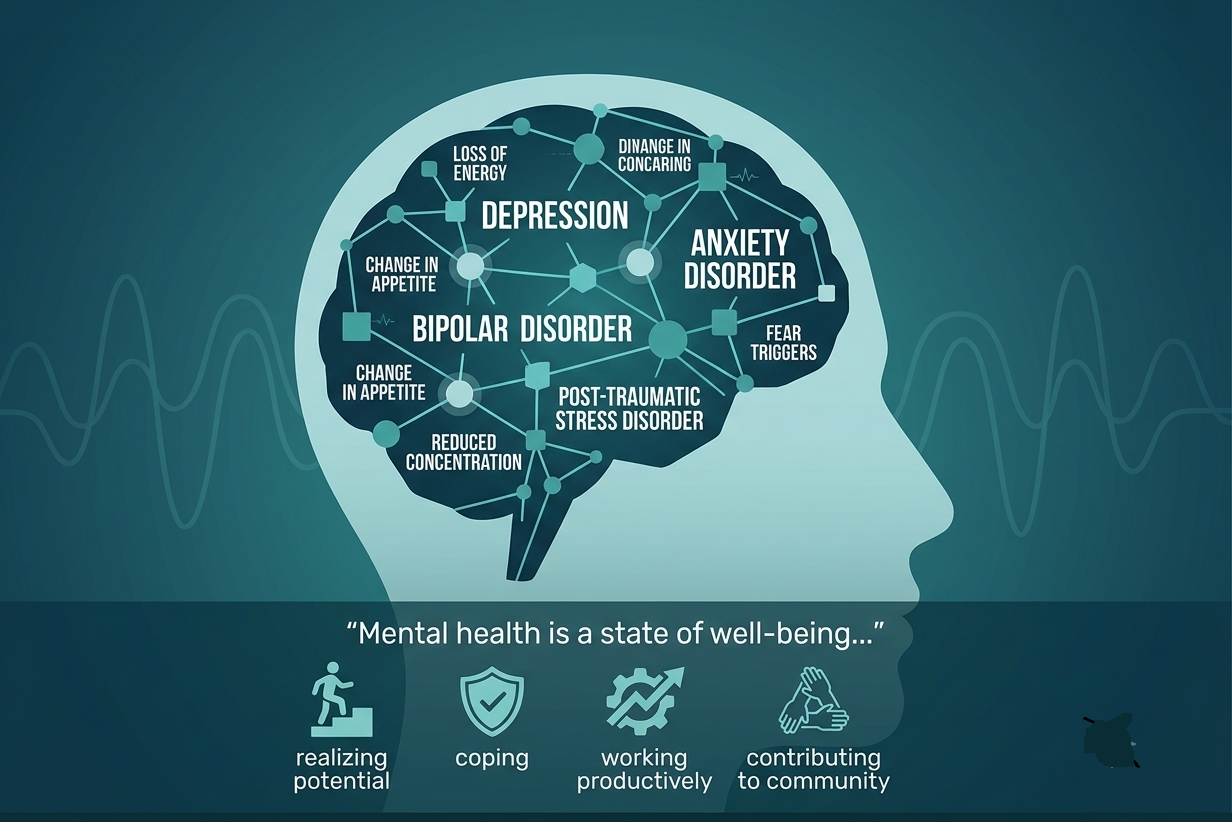
Defined as a state of well-being in which every individual realizes his or her own potential, can cope with the normal stresses of life, can work productively and fruitfully, and is able to contribute to her or his community.
Mental Illness / Disorder
Mental illnesses are health conditions involving changes in emotion, thinking or behavior (or a combination of these). Mental illnesses are associated with distress and/or problems functioning in social, work or family activities.
Common Types of Mental Disorders
Depression
A common mental disorder characterized by persistent sadness and a loss of interest in activities that you normally enjoy, accompanied by an inability to carry out daily activities, for at least two weeks.
- Loss of energy
- Change in appetite
- Sleeping more or less
- Anxiety
- Reduced concentration
- Indecisiveness
- Restlessness
- Feelings of worthlessness, guilt, or hopelessness
- Thoughts of self-harm or suicide
Anxiety Disorders
Occasional anxiety is an expected part of life, but anxiety disorders involve more than temporary worry or fear. For a person with an anxiety disorder, the anxiety does not go away and can get worse over time.
- Generalized Anxiety Disorder
- Panic Disorder
- Phobia-related disorders
Bipolar Disorder
A chronic or episodic mental disorder that can cause unusual, often extreme and fluctuating changes in mood, energy, activity, and concentration or focus.
Depressive episodes: Feeling sad, indifferent, or hopeless with very low activity level.
Post-Traumatic Stress Disorder (PTSD)
A disorder that some people develop after experiencing a shocking, scary, or dangerous event. This fear triggers many split-second changes in the body to respond to danger.
- The "fight-or-flight" response is a typical reaction meant to protect a person from harm
- Nearly everyone will experience a range of reactions after trauma
- Most people will recover from those symptoms naturally
- Those who continue to experience problems may be diagnosed with PTSD
Breaking the Stigma
Mental health related challenges can affect you or the people around you. Unfortunately, an alarming number of employees experiencing mental health related challenges choose not to seek help due to stigma, discrimination or fear of losing their jobs.
Remember: Seeking help is a sign of strength, not weakness. Mental health conditions are treatable, and support is available.